Thursday, October 21, 2010

Herbie Hancock: Empyrean Isles (1964)

In a word, terrifying.  The incendiary brainchild of four artists in the first bloom of their careers, Empyrean Isles remains one of the most daringly imaginative titles ever to appear under the Blue Note label.  Its best tracks--none better than the astonishing closer, "The Egg"--possess a nervous energy, a panicky urgency suggestive of some imminent crisis over which the music broods.  The percussion crackles; the piano skitters about, its notes like supercharged ions crashing into one another; and the trumpet, meteoric, burns through it all, with all the brashness--with the piercing swagger--we'd expect, not quite from Clifford Brown, but perhaps from Brown's rebellious bastard child.  The whole is a seething mass that, for all the flashy originality of its individual performers, somehow coheres beautifully: the players keep on goading each other--and us--to audacious new heights, to lushly exotic musical terrains.  This is music, in short, that we're still learning how to listen to.
 
The record's frenetic, high-octane sound was, in part, the sound of youth.  This is an album cut by a cadre of kids, essentially: Hancock was freshly 24, though he'd already released two titles as a bandleader; Freddie Hubbard (cornet) and Ron Carter (bass) were only slightly older; while Tony Williams (drums), that most freakishly precocious of jazz prodigies, was, at 18, not even old enough to be legally admitted into the nightclubs he played at.  Hancock, Carter, and Williams were still active members of Miles's legendary second quintet, and had yet to record most of the records for which that group became famous: Miles Smiles, Nefertiti, The Sorcerer, and others.  But Hancock, in organizing his own independent projects on the side, clearly was after something different from the old master: if Miles was interested in raw, at times soupy and formless, explorations into the unknown--jointly spearheaded by fast-rising star Wayne Shorter--then Hancock revealed, by contrast, a fascination with hard bop, a style that had peaked in the mid 50s but was still enjoying relative popularity.  Yet this wasn't the same hard bop that guys like Horace Silver and Cannonball Adderley had made famous a decade before; it was bop with an avant-garde twist.  True, cuts such as the opener, "One Finger Snap," and the contagious "Cantaloupe Island" (later recycled by US3 as "Cantaloop" in what would become Blue Note's best-selling single of all time) are straightforward enough.  But the moment we venture upon "The Egg" or "Oliloqui Valley" (especially the superior alternate take) we're confronted with vast, unwieldy soundscapes that, in their experimentation, remind us that this was also the year that A Love Supreme was recorded.  Soaking up both versions of "Oliloqui Valley" will reveal how adventurously inventive these wunderkinds were--how willing to branch off in completely different directions from one take to the next.  But one keeps coming back to "The Egg," which, in its solos, its almost telepathic interplay among the four players, and its sinister middle section--where the music slows to a creeping pace and Ron Carter takes a bow solo while the others chime in furtively--seems to distill the essence of the Empyrean Isles project.


It's tempting to pick out one member of this supergroup and say, "He's the one who makes this session tick."  But there's really no one who jumps out more than anyone else.  Yes, the man-child Tony Williams is frighteningly good, showing off the constant speeding-up and slowing-down of tempos and range of rhythms that propelled the Miles quintet.  But so is Freddie Hubbard, who delivers in Empyrean Isles what must be one of the single best, and most confident, studio performances on a trumpet (actually, it's a cornet) of the 1960s.  Among hard bop trumpeters during his own lifetime, he had only the brilliant but doomed Lee Morgan for company.  Ron Carter is always damned good as far as I'm concerned, and, well, Hancock is simply the only jazz pianist post-1950 who could stand toe-to-toe with Bill Evans.  If Evans was the contemplative, Debussy-influenced impressionist--the "quiet fire," as Miles dubbed him--then Hancock was the young punk whiz-kid who thrived on complexity for its own sake, the guy who, in his spare time, took apart gadgets and put them together again, and read Buddhist scriptures.  A student of engineering who was obsessed with electronics, he was one of the earliest and most ardent proponents of the fusion music that came along some years later.  And his intriguing later records (Crossings, Mwandishi), startlingly different from this one, show that he was one of the most successful practitioners of that style.  But in a sense he was never better than he was on his stripped down, visionary early albums, Empyrean Isles and, to a lesser extent, the more celebrated but less bold Maiden Voyage (1965).


Empyrean Isles

1. One Finger Snap (7:23)
2. Oliloqui Valley (8:30)
3. Cantaloupe Island (5:34)
4. The Egg (14:01)
5. One Finger Snap - Alternate Take (7:36)
6. Oliloqui Valley - Alternate Take (10:47)


Sunday, October 3, 2010

Curtis Mayfield: Curtis/Live! (1971)


Has there ever been a sub-genre as electrifying, as cool, or, at its best, as transcendentally moving as 1970s soul?  Some forty years after their original release, the greatest soul records still shine like burnished steel, still radiate much of the brutal honesty, the visionary hope, the frustrated bitterness that they did when they first appeared.  Lyrically and musically, the stuff goes on speaking to us with an urgency and, in many cases, an operatic poignancy almost unique among the music of the last several decades.  When I think of the best American soul artists--like many people, I'd imagine--I think of Marvin Gaye and Curtis Mayfield; they're forever paired together in my mind, perhaps unfairly, a tandem representing the twin blossoms of the Detroit and Chicago soul scenes, respectively.  Of the two, I've always had more admiration for Mayfield, a musician who has held me consistently in thrall for the last decade or so, a fixture through all my countless listening phases.  Although Gaye is the one who's received more accolades, by far--he's the "Prince of Soul," after all--when the smoke clears, it may be that Mayfield will emerge as the more awesomely gifted of the two, the guy who, to speak simply, wrote more great songs and was more genuinely bent on effecting social change through his art.  Indeed, anyone who has listened to their respective masterpieces, What's Going On and Superfly, side by side, knows that the latter is superior: What's Going On is essentially three stunningly good songs placed at the beginning, middle, and end of the album, with filler interspersed between; Superfly, on the other hand, is hair-raisingly good from start to finish.  Gaye claimed that with What's Going On he finally began "writing with his head instead of his penis," but even after that record he reverted to making songs about fucking, his enduring theme; Mayfield, though, spent his entire career crafting tough, cerebral, and often overwhelmingly beautiful--if tragic--jeremiads about the nightmarish plight of America's inner city, elegies on drug dealers left to die on corners, and celebratory songs reminding black people that they were beautiful, winners second to none, in case they'd forgotten.  We are still sifting through his mind-boggling legacy.

Curtis/Live! is one of Mayfield's finest recordings, and one of the most intriguing live albums of the decade. On a freezing January night in 1971, Mayfield and three hired session men--Master Henry Gibson (percussion), Craig McMullen (rhythm guitar), and Joe "Lucky" Scott (bass)--appeared at The Bitter End, the intimate club on Greenwich Village's Bleecker Street.  The legendary performance that ensued is one defined by a sense of hushed intensity: Mayfield and his three-piece group hustle through these songs--most of them culled from his recently-released Curtis (1970), as well as the records he'd made with The Impressions--with a muffled urgency that derives power from restraint, a stripped-down rawness that makes for a fascinating set of takes on the album versions.  What drives this set above all is Gibson's wizardry on drums.  Gibson, a vastly underrated drummer who happens to be the world's most recorded percussionist (he appeared on over 1200 albums), veritably gallops along on drums and, occasionally, congas, lighting a fire under Mayfield's ass while the latter joyously pours out his trademark falsetto.  Motherfucker can play.  And, well, the songs themselves are simply a delight, contagiously danceable charts featuring Mayfield's patented social commentary, with political "raps" sprinkled in between: "For a country so far advanced, we seem to be able to do everything but get along.  There's even a bit of humor in it, when you think of such people as Agnew," he muses.  The crowd is clearly eating up the whole of it; Mayfield's rallying cries for black power are especially galvanizing.  "We're so goddamm undecided," he complains on the excellent opener, 'Mighty Mighty (Spade and Whitey).'  "I'm black and I'm proud!"  By the close of the set, his listeners are obviously transfixed.  One tries to imagine them crowded together in this rather small venue, struggling to keep warm but also utterly enchanted by the show, perhaps even conscious of the fact that they were witnessing a historic performance.

So that's really it.  The entirety of the album is very good, but in some ways the stretch beginning with "Check Out Your Mind" and continuing through "The Makings of You" is the highest point, and is worth the price of the whole record.  This last song is simply one of the loveliest, most unabashedly sweet pieces I've ever heard, and Mayfield gives it a fine treatment here, though I think I'll always prefer the lushly produced studio version.  Also worthy of note is a highly charged rendition of "Superfly" towards the end, a bonus track from a later show that was included on the compact disc reissue, and that gives a sneak peek of great things to come in Mayfield's career.  This is a record that catches Mayfield just as he's hitting his stride, and there's something wonderfully fun about hearing him discover his remarkable powers as a songwriter and performer.  Wear it out, especially late at night, when it seems to sound best.


1. Mighty Mighty (Spade and Whitey) (6:56)
2. Rap (0:26)
3. I Plan to Stay a Believer (3:26)
4. We're a Winner (4:47)
5. Rap (0:51)
6. We've Only Just Begun (3:44)
7. People Get Ready (3:47)
8. Rap (0:34)
9. Stare and Stare (6:12)
10. Check Out Your Mind (3:53)
11. Gypsy Woman (3:48)
12. The Makings of You (3:28)
13. Rap (2:01)
14. We the People Who Are Darker Than Blue (6:46)
15. (Don't Worry) If There's a Hell Below, We're All Going to Go (9:27)
16. Stone Junkie (8:05)
17. Superfly (3:56)
18. Mighty Mighty (Spade and Whitey) (Single Version) (3:16)

Sunday, September 19, 2010

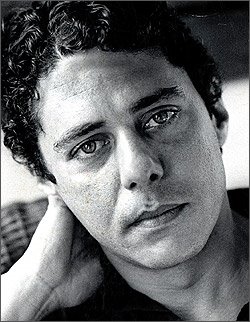
Chico Buarque: Construção (1971)


Late one night on a recent trip to Brazil, I found myself at a very hopping club in the Lapa district of Rio de Janeiro, where a band was performing a catchy samba tune with great energy and gusto.  I was standing at the bar waiting for a caipirinha and tipsily swaying to the beat, when I suddenly realized I knew the melody, though I couldn't think of the artist.  The gal whom I was traveling with during this leg of the trip, a Brazilian, turned to me and said, "Oh, I love this song!  It's by Seu Jorge."  I paused a moment, then shook my head, troubled.  No, I thought, someone much older, and much more talented than Seu Jorge, wrote that song--but who?  Then it hit me: Chico Buarque.  It was the second song off Construção, though I couldn't come up with the title.  "No," I said to my friend knowingly, "It's by Chico Buarque.  Seu Jorge just covered it.  It goes all the way back to 1971."  My friend shot me a glare that said, "Jesus, what the hell is wrong with you?"  And I giggled.  The funny thing was, that was only one encounter with Chico Buarque among quite a few I experienced during my two weeks in Brazil.  In fact, more than any other musician, it was Buarque who came up in conversations I had with local people about Brazilian music.  "Do you know Chico Buarque?" one person after another would ask me.  And immediately I would hear the melody from "Valsinha" in my head, sung in that unmistakable voice, and swoon a little, then nod vigorously.

It's no surprise, I suppose, that so many people are still talking so emphatically about Chico Buarque, and playing his music so ardently: since he began his career in the mid-sixties, the man has fashioned more jewel-like melodies--melodies perfectly wedded to clever lyrics--than all but a very small handful of his countrymen.  Whether or not you care for Buarque's renditions of his own songs, and particularly for his sultry-soft, Kermit the Frog-like voice, is a matter of personal taste.  You can't quibble, though, with his dizzying legacy, a mother lode of some thirty albums recorded over four decades, containing some of the most beloved and frequently covered tunes in Brazilian music--and some of the most sophisticated poetry MPB has produced.  Prettier than anyone has any business being, he nevertheless shunned the teen idol role from the very beginning, determined to carve out a reputation as a "serious" musician. And he started his career making records that, while ambitious enough in their own way, were relatively safe and conservative, both musically and lyrically.  By the early seventies, though, he had metamorphosed into a strident socio-political commentator, as Construção bears witness.  He spoke out with bold, if thinly veiled, indignation against political injustices in Brazil and especially in his native Rio de Janeiro (most famously in "Calice," his duet with Milton Nascimento), and was in fact temporarily exiled by the military dictatorship for his candor, spending a portion of the 1970s in Europe.

Most listeners who have really put in the time with Buarque's discography seem to agree that Construção is his greatest single recording, an album that, in its daring conception and richly diverse textures, outpaces anything he had done before or would do afterward.  Its centerpiece is the chilling title track, a mini-masterpiece that, like one or two other songs on the record, sounds rather like a fragment from a musical.  (In fact, Buarque had co-written a musical some years before, and this would appear to have prepared him for the writing of Construção).  "Construção" is an indictment of the dreary, dehumanizing lifestyle of the Brazilian working class, appropriately set against a monotonous rhythmic backdrop and sung in a rigidly robotic fashion.  Like The Beatles' "A Day in the Life," it tracks the progress of an everyman as he wakes up in the morning, gets ready for the day, and proceeds to go to work.  But Buarque's song is not a tale of postmodern ennui; it's one of grim economic determinism, in which people are forced to take on jobs that degrade and finally destroy them in order to make ends meet--and in the process relinquish their souls.  The dual opiates of sex and cachaça help numb them even as they're gradually transformed into machines.  In the course of the song, the protagonist, a construction worker who plies his trade atop a scaffolding high above the ground, leaps into the air in a moment of desperation, falling to his death in the street below ("He stumbled into the sky like a drunk / And floated in the air like a bird / And ended up on the ground in a limp bundle / Agonized in the middle of the street").  (I interpret this part as a suicide, though I concede it's ambiguous.)  In the song's bitterly ironic climax, Buarque repeats the phrase "Deus lhe pague" ("God shall reward you"), a reprise from the opening track, angrily targeting the empty promise of a heavenly afterlife that sustains these people through their otherwise unbearable lifestyles ("For the flies, insects which kiss and cover us / And for the final peace that will redeem us in the end / God shall reward you").  Admittedly, this sounds like deeply depressing stuff, but the experience of listening to it is a seriously stirring and invigorating one.

om: http://lyricstranslate.comhelp numb them even as they're gradually transformed into machines.  In the course of the song, the protagonist, a construction worker who plies his trade atop a scaffolding high above the ground, leaps into the air in a moment of desperation, falling to his death in the street below ("He stumbled into the sky like a drunk / And floated in the air like a bird / And ended up on the ground in a limp bundle / Agonized in the middle of the street").  (I interpret this part as a suicide, though I concede it's ambiguous.)  In the song's bitterly ironic climax, Buarque repeats the phrase "Deus lhe pague" ("God shall reward you"), a reprise from the opening track, angrily targeting the empty promise of a heavenly afterlife that sustains these people through their otherwise unbearable lifestyles ("For the flies, insects which kiss and cover us / And for the final peace that will redeem us in the end / God shall reward you").  Admittedly, this sounds like exceedingly depressing stuff, and it surely is to an extent, but the experience of listening to it, if occasionally terrifying (e.g. at 1:57 after the man's death) and even downright overwhelming at the end, is an oddly invigorating one.
One might go on for some time talking about the songs on Construção in this manner, since nearly all of them are as intricately crafted and hence bear the weight of serious commentary.  "Valsinha," a wrenching ballad, "A Minha Historia," a little oasis in the otherwise bleak soundscape that is Construção--these are a couple of the highlights that will keep you coming back to this album, and perhaps inspire you to venture further into Buarque's massive catalogue. 


1. Deus Lhe Pague (3:20)
2. Cotidiano (2:50)
3. Desalento (2:48)
4. Construção (6:24)
5. Cordão (2:32)
6. Olha Maria (3:57)
7. Samba de Orly (2:40)
8. Valsinha (2:01)
9. Minha Historia (Gesubambino) (3:02)
10. Acalanto (1:39) 

Sunday, September 12, 2010

Jorge Ben: Força Bruta (1970)

This is the third installment of a special feature I'm doing on Jorge Ben here at Wanwood. He's the first of a series of artists to whom I plan to give special attention, owing to their tremendous creative firepower, fecundity, and—in Jorge's case—peculiar neglect among listeners outside Brazil. My own thinking is that, with the advent of file sharing, and especially the remarkable flourish of music blogs over the past two or three years, the good news about musicians like Jorge—previously known only to privileged coteries—will gradually diffuse worldwide. Little by little, iPods everywhere are beginning to bounce and thump with grooves that, in decades past, were the exclusive domain of the vinyl-purchasing underground.

In a sense, all you really need to know about Força Bruta (1970) is distilled in the first, and arguably best, track on the record, "Oba, La Vem Ela" ("Oh, damn! Here she comes"). In brief, the song tells the story of a guy who spots a beautiful woman approaching—a woman whom he knows intimately though she is oblivious to him—and becomes irrepressibly excited in her presence, in spite of the fact that she doesn't notice him. The most obvious and frequently-drawn parallel is to "The Girl from Ipanema," but an even closer analogue is "Cyprus Avenue" from Van Morrison's Astral Weeks (1968). Both songs are, beneath the surface, about unbridled desire—specifically male desire—for a love object that remains unattainable, and about how ultimately it's of no consequence whether the feelings are requited or not. The real burden of the meaning in each far exceeds the literal sense of the words, which, especially in "Oba, La Vem Ela," are pretty bare bones: the speaker's gradually mounting excitement bordering on frenzy, the frustration and finally the rage of thwarted sexual need—these are emotional terrains that lie beyond the reach of language, but are bodied forth with all the clarity and force of revelation in the song's marvelous vocals, suave but eventually screaming. Critics of Jorge Ben sometimes complain that his music wasn't adequately subversive, since it didn't directly address the political injustices occurring in Brazil during the 1960s and 70s (unlike, famously, Caetano Veloso's and Gilberto Gil's). But I wonder if these same people have listened to the end of "Oba, La Vem Ela" (or for that matter "Africa Brasil (Zumbi)" off Africa Brasil, or any number of similarly furious Jorge songs): lyrically it's innocuous enough, but acoustically it's incredibly subversive, even terrifying. Much of Jorge's catalogue, in fact, crackles with a rebellious energy whose equal I find nowhere in Veloso's or Gil's music, no matter how politically defiant their lyrics might be.

And, oh, that voice! Yes, it's capable of snarling and shrieking, but most of the time on Força Bruta it's seductively mellow and relaxed. A commenter on YouTube puts it aptly: "Uuuuuugggghhhhhh that honey soulful voice melts my heart and makes me smile everytime!" Another: "Jorge Ben is more addictive than doritos, crack and cigarettes combined!!" Hyperbole, maybe, but not by much! Jorge's is one of the few voices, in fact, that withstand comparison with Van Morrison's: both have a rough-hewn gorgeousness that, when impassioned, can simply spellbind you with their intensity--their vocal pirouettes--and when subdued can seem like some blissful opiate.  And the latter, again, is how Força Bruta most often comes off, with Jorge--backed by the Trio Mocoto--piling one freewheeling samba pastiche on top of the other.  "Ze Canjica," "Charles Jr.," "O Telefone Tocou Novamente," and the ultra-catchy "Mulher Brasileira"--these are the gold nuggets of the record; and if your tastes are at all similar to mine, you'll get more pure mileage out of them than most any other Ben record.  It's quite true that it's not nearly as packed with ideas as its predecessor, the celebrated Jorge Ben (1969)--and some contend, in fact, that its stripped-down quality was a result of Ben's exhaustion after completing the prior album--but between the two of them, this is the one I nearly always go to when I need a fix.  Awash with strings, unflaggingly cool, the whole of Força Bruta sounds like it was recorded in a haze of cannabis smoke.  Turn it on, lie back, and drift away.

The password for this one, as for all of the Jorge records, is "vibes".  Enjoy!


Força Bruta

1. Oba, La Vem Ela
2. Ze Canjica
3. Domenica Domingava Num Domingo Toda de Branco
4. Charles Jr.
5. Pulo, Pulo
6. Apareceu Aparecida
7. O Telefone Tocou Novamente
8. Mulher Brasileira
9. Terezinha
10. Forca Bruta

Tuesday, August 10, 2010

Baden Powell & Vinicius de Moraes: Le Monde Musical de Baden Powell / Os Afro-Sambas de Baden e Vinicius (1964/1966)


Two beautiful, rich records, reaped at the remarkable height of Baden Powell's creative harvest in the 1960s. I'm featuring them both, in part because it's my birthday and I want to offer something extra in light of this, but more importantly because I always think of them in tandem: Le Monde Musical de Baden Powell and Os Afro-Sambas represent, in a sense, the Apollonian and Dionysian sides of Powell's musical imagination, respectively. If Le Monde is a collection of highly stylized baroque explorations--over which the ghosts of Segovia and especially Bach hover--then Os Afro-Sambas sounds like a set of gleeful (and ingeniously constructed) chants belted out at some satanic sabbath. Together they comprise a profoundly compelling picture of the man who, when the smoke clears, may well emerge as the most talented--and technically proficient--guitarist to have thus far come out of Brazil. Which is saying a great deal, given that this is the land that produced the likes of Gilberto.

Of the two albums, Os Afro-Sambas is the more universally lauded; practically everyone seems to be in agreement about its magic, as well as its cultural importance. But for whatever reason, Le Monde is the one that initially grabbed me. The French title derives from the fact that Powell, originally from Rio, had emigrated to Paris in 1963 (aged 27), beckoned there by friend Vinicius de Moraes, the well known poet, diplomat and lyricist. In hindsight, this seems an odd choice: Rio was, in the late 50s and early 60s, an epicenter of musical activity, the city where bossa nova, the style invented by Jobim and perfected by Gilberto, was just then reaching its fullest expression. Perhaps Powell had grown bored of this music--its commercialization, and the fetishization of Brazilian culture abroad (esp. in America) that this had partly caused--and hence wanted out. Or maybe he was following in the footsteps of certain of his musical heroes, like Django Reinhardt, who had done the same in decades past. Whatever the motivation, he arrived in Paris and quietly but quickly began to make his presence felt: on television specials, in performances at private homes, Powell introduced his signature sound, an artful admixture of Brazilian and European styles, the latter stemming from his training as a classical guitarist. The finest tracks on Le Monde, which he cut in spring of 1964, beautifully enact this dual heritage. "Samba em Preludio," for example, begins classically, with a series of relentlessly repeated arpeggios, over which a tensely mysterious string part is delicately sustained; in the second half, though, it shifts gears to samba mode, with Powell plucking away methodically while a woman's disembodied voice pours out a lovely, fresh-peeled melody. Ghostly, gorgeous stuff.

It's funny, though: go to the All Music Guide to read up on Le Monde and you'll find that their review of it, written by Scott Yanow, is decidedly lukewarm. Giving it three stars, Yanow complains that "the music comes off as overly sweet, safe and sleepy," notes the presence of "unimaginative arrangements" [!], and finally passes it off as "pleasant background music" that's "nice but predictable." Sometimes one wonders if these charlatans actually listen to the albums they're reviewing from start to finish. (To AMG's credit, they had another guy re-review it some time afterward, and he wrote of it much more positively.) At any rate, even if there is some controversy about the record, there is little to none about its successor, Os Afro-Sambas, which is continually ranked among the dozen or so greatest Brazilian albums. Listening to it now for the fiftieth time, it strikes me, like so many other records thus far featured on this blog, as a marvelous feat of syncretism. Powell (like, say, Jorge Ben) had a special genius for integrating any number of vastly distinct musics into a unified style that was rich and strange, and that somehow cohered, somehow worked. We now know that prior to making Os Afro-Sambas he'd been studying various African musical traditions alongside Gregorian chant; and the record, accordingly, marries African (specifically, Yoruban) and Bahian beats and instrumentation--and call-and-response patterns--with medieval choral modes, the latter heard especially in the weird female vocal parts (sung by the Quartet em Cy, a group of four sisters from Bahia). Supplying the lead vocals is Moraes, who had contributed ideas to Le Monde but not sung on it, and here provides what are considered some of the most poetic, mellifluous lyrics in Brazilian music, delivered in a mellow, slightly husky voice that often evokes nostalgia and world-weariness ("Vem comigo a Salvador. . ."). Moraes was something of a musical soulmate for Powell; the two of them would often retire to Powell's house for days at a time, drinking whisky and composing songs. Though this write-up has focused primarily on Powell, it's well worth noting that Moraes was an equally fascinating figure in his own right: the self-professed "blackest white man in Brazil," he began his career as a poet, then left his country to pursue a degree in English Literature at Oxford; having earned this, he went on to work for the Brazilian consulate in Paris, and, finally returning home, wrote the words for more classic Brazilian songs (e.g. "Desafinado") than one can count. Hell, he even co-wrote a musical, Black Orpheus, that won the Palme d'Or at Cannes in 1959.

I'm tempted to say more about individual tracks off Os Afro-Sambas, but this review has already become rather monstrous, so I'll leave you instead to lose yourself in the album's eerie bacchanalian delights. I'll only add these disclaimers: that the sound quality is regrettably mediocre, with occasional fluctuations in volume; and that you might initially find the Quartet em Cy a little shrill and off-putting, especially on the more up-tempo tracks--but give yourself time and you'll come to appreciate them. Note, finally, that the version of this record that I'm featuring here is the original masterpiece from 1966, not the so-so remake that Powell did in 1990. Enjoy!


Le Monde Musical de Baden Powell

1. Deve Ser Amor (3:54)
2. Choro Para Metronomo (3:00)
3. Adagio (3:07)
4. Berimbau (3:03)
5. Samba em Preludio (3:30)
6. Chanson d'Hiver (2:27)
7. Samba Triste (3:33)
8. Berceuse a Jussara (2:37)
9. Prelude (2:54)
10. Euridice (3:05)
11. Bachiana (4:10)
12. Garota de Ipanema (2:59)

Os Afro-Sambas

1. Canto de Ossanha (3:23)
2. Canto de Xangô (6:28)
3. Bocoché (2:34)
4. Canto de Iemanjá (4:47)
5. Tempo de amor (4:28)
6. Canto do Caboclo Pedra-Preta (3:39)
7. Tristeza e solidão - (4:35)
8. Lamento de Exu (2:16)


Saturday, August 7, 2010

Mahmoud Ahmed: Erè Mèla Mèla (1975)


If your ears are accustomed to the likes of The Decemberists, this recording may--and likely will--fuck with you. Listening to its ten tracks for the first time might, in that case, be comparable to doing neat shots of Bacardi 151 after years of sipping Franzia. Dizziness, confusion, even panic will ensue; you'll recoil, as if from an electric shock; and, finally, you'll grow used to it, love it, perhaps become hooked on it. Indeed, you'll marvel that you ever made do with boxed zinfandel, now that you've gained access to daddy's liquor cabinet.

There is something innately shocking about Erè Mèla Mèla (1975), a mind-expanding strangeness that alone makes it worthwhile listening for anyone weaned on Anglo-American pop. The first few bars of the excellent "Abay Mado - Embwa Belew," for example, sound familiar e
nough: a saxophone soli played atop a raucous foundation of percussion, resembling any number of soul-jazz records from the 1970s. But then Ahmed opens his mouth and begins to sing. As for what comes out, I have no idea how to classify it because I've never heard anything quite like it. It's a quivering, impassioned vocal that swirls up and down the scale with seeming ease, wonderfully melodic, as you'll see once you get the hang of it, and clearly Arab-inflected. The record's "trick," to the extent that it has one, lies in the way it brilliantly grafts these ecstatic Middle Eastern-sounding vocals atop a scaffolding of jazz rhythms. The thrilling result is a kind of trance music that demands your full attention but will, in return, elevate you into the sort of sublimely hypnotized state that one senses Ahmed was in when he produced it. Simply stated, songs like "Atawurulegn," "Era Mele Mele - Meche Neu," and the terrifying first two pieces (really one extended song) represent some of the most moving, danceable, and frequently ferocious music I've lately heard. They have the heft of ancient chants.

Ethiopia, it seems, witnessed a surge of musical creativity during the 1950s, 60s, and 70s, when a range of fiercely original voices entered the studio under contracts with national record companies (of which Philips-Ethiopia appears to have been the best known) that granted them a great deal of artistic freedom. Of these voices, Mulatu Astatke, who played with Duke Ellington, made the biggest splash, and was perhaps the most prolific. But Mahmoud Ahmed remains the most affecting of the ones I've thus far heard, and Erè Mèla Mèla (1975) seems to be the best introduction to his challenging output.

Part I
Part II

Erè Mèla Mèla

1. Sigedegnash Negn/Samiraye (5:33)
2. Indenesh Gedaow (3:45)
3. Bemin Sebeb Litlash (4:32)
4. Abay Mado/Imbwa Belew (6:57)
5. Atawurulign Lela (3:57)
6. Ohoho Gedama (4:44)
7. Ere Mela Mela/Meche Neu (8:01)
8. Fetsum Dink Lij Desh (4:31)
9. Belomy Benna (3:55)
10. Asheweyna (4:32)


Saturday, July 24, 2010

Gato Barbieri: Latin America: Chapter 1 (1973)


Gato Barbieri is one of the unsung heroes of late twentieth century music. If you've heard of him, it's probably through the credits of Last Tango in Paris (1973), that faux-arthouse spank film that Marlon Brando did in the immediate wake of The Godfather. Gato wrote the award-winning soundtrack for the movie, and this was probably the most valuable and enduring thing about it. If you watch the film and are sufficiently enchanted by the music, you might even hit up Amazon.com and search for Gato in the website's music section. The first two results that will come up are a "Best of Gato Barbieri" disc with an outrageously tacky photo of Gato on its cover, along with an album called Caliente that he recorded in the late seventies. Here's the thing: Caliente, while a good and fine album, doesn't represent Gato at his best--not even close; and that "Best Of" collection is filled with tunes culled from the latter portion of Gato's career, after he'd jumped the proverbial shark. You'd hardly gather from the reviews, however, that there was anything lacking about either of these discs; most customers are veritably slobbering over them.

If you want to hear Gato at his feral, manic best, you'll need to backpedal a few years to the early seventies, when he scaled a towering Alp of creative vision that most other musicians can only dream of. An Argentinian born in 1934, presumably he came of age imbibing the sounds of middle and late Coltrane, those impassioned ebullitions of sound that distilled, in their own way, the fury and determination of the Civil Rights movement. "When 'Trane died," said one of Coltrane's contemporaries whose name I can't remember, and whose exact words I'm struggling to quote from memory, "it was like he left a giant crater in his wake. We all felt a little empty and lost." A number of saxophonists, all of them touched by Coltrane in some way, quickly rallied to fill that crater. The best of these, perhaps, were Pharaoh Sanders, Wayne Shorter, the underrated Gary Ba
rtz, and Gato. To be sure, distinct echoes of A Love Supreme and Crescent can be found in Gato's best work: the daring harmonic experimentation, the famous "cascades of sound" approach. But what makes albums like Bolivia, El Pampero, Fenix, and the four-chapter Latin America series tick, it seems, is their cunning synthesis of North American jazz harmonies with the indigenous folk rhythms of Gato's native South America. (Check out, for example, the second movement of the stunning four-part suite "La China Leoncia".) Underneath the deranged Orphic probings of "Encuentros," "India," and especially "La China," one senses the presence of something really profound: vast swathes of rhythmic and melodic tradition, the accumulation of centuries, which Gato was frantically seeking to excavate, commit to vinyl, and preserve for all time. The fact that he recruited a group of session men exclusively from Argentina, and cut the record in Buenos Aires, further hints that he was attempting something like a sonic panorama of his native continent, insofar as such a thing is possible; whether he succeeded, you can of course decide for yourself. What is beyond debate is that Latin America: Chapter 1 and its three successors represent one of the most frenzied, original projects of 1970s music.

Whatever it was that Gato had tapped into by this point--and it was something truly special--it may have been too much for him to contain. By the second half of the seventies, he had signed with a different record label (A&M, and later Sony, Columbia, and CBS) and was recording the comparatively innocuous stuff found on
The Best of Gato Barbieri. Thankfully, though, by this point he had already left behind a string of albums that testify to his astonishing gifts, and that we can only listen to in rapt wonder, even disbelief, marveling that we have never heard of him.

Latin America: Chapter 1

1. Encuentros (12:29)
2. India (8:58)
3. La China Leoncia Arreo Correntinada Trajo Entre la Muchachada la Flor de la Juventud (13:30)
4. Nunca Mas (5:27)
5. To Be Continued (2:26)